
OMG – Oh My God!
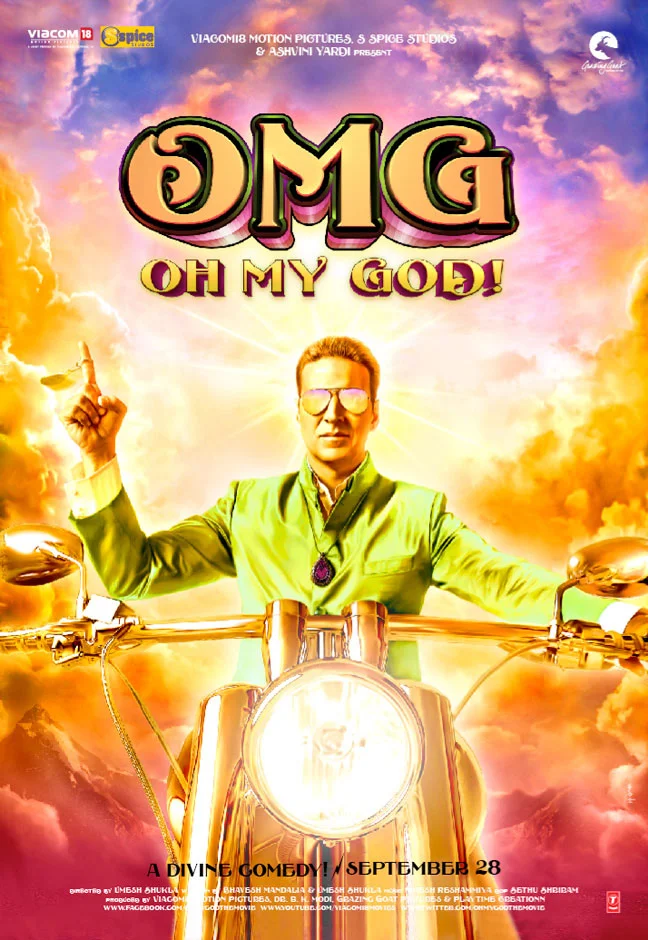
Table of Contents
Quick Facts
OMG – Oh My God!, released on 28 September 2012, is one of the bravest mainstream Hindi films ever made — a satirical comedy-drama in which an atheist shopkeeper sues God. Directed by Umesh Shukla and starring Paresh Rawal in a career-defining role alongside Akshay Kumar as a very unconventional Krishna, the film takes aim at godmen, blind faith and the business of religion with a wit sharp enough to cut and a heart big enough to avoid cruelty. It is funny, fearless and surprisingly moving.
Streaming on JioHotstar, the film remains startlingly relevant — its questions about faith, fraud and fear have only grown more urgent with time. Adapted from a Gujarati play (with echoes of the Australian film The Man Who Sued God), it proved that Indian audiences were ready for intelligent satire, and it spawned a successful sequel years later.
Plot
Kanji Lalji Mehta (Paresh Rawal) is a shrewd atheist who runs a shop selling religious idols — he profits from faith he does not share. When an earthquake destroys his shop, the insurance company refuses his claim, calling it an “act of God.” Kanji’s response is gloriously literal: if it was God’s act, then God should pay. He files a lawsuit against God, dragging temples, godmen and religious institutions into court as God’s earthly representatives.
The courtroom becomes a battleground of ideas. Arrayed against Kanji are powerful godmen, including the formidable Leeladhar Swamy (Mithun Chakraborty), who see the case as an attack on faith itself. But Kanji finds an unlikely ally in a mysterious, motorcycle-riding stranger (Akshay Kumar) who claims to be Krishna himself — and who helps Kanji expose the hypocrisy of the religious establishment with logic, scripture and impeccable comic timing.
The film’s triumph is that it never becomes anti-faith. Kanji’s journey is not from atheism to belief in the simplistic sense — it is from cynicism to a genuine, personal understanding of the divine, stripped of middlemen. The climax, in which the godmen’s empire of fear collapses under the weight of its own contradictions, is both satisfying and thought-provoking.
Performance
Paresh Rawal is phenomenal as Kanji — this is arguably the finest performance of his career, a masterclass in comic timing, rhetorical fire and quiet vulnerability. He makes Kanji’s arguments feel personal rather than preachy, and his courtroom scenes are electrifying. Akshay Kumar is perfectly cast as the modern, mischievous Krishna — relaxed, charming and just divine enough to be believable, bringing star power without overwhelming Rawal’s film.
Mithun Chakraborty is superb as Leeladhar Swamy, the godman whose smooth menace makes him a worthy adversary — he never caricatures the role, which makes the character far more chilling. The supporting cast of lawyers, devotees and family members is uniformly strong, grounding the film’s big ideas in recognisable human behaviour.
Screenplay and Direction
Umesh Shukla directs with confidence and clarity, keeping the film’s potentially explosive subject matter focused and good-humoured. The screenplay (adapted from the play Kanji Virudh Kanji) is brilliantly constructed — the courtroom scenes crackle with genuinely clever arguments about religion, commerce and common sense, and the film balances its satire with real emotional stakes. The humour is intelligent rather than crude, and the pacing never sags.
What impresses most is the film’s tonal discipline. Satire this pointed could easily become shrill or preachy, but OMG keeps its wit and its warmth in perfect balance. The dialogue is sharp and quotable, and the film trusts its audience to think — a rare and welcome quality in mainstream cinema.
Music
The soundtrack by Himesh Reshammiya, Sachin–Jigar and Meet Bros. Anjjan serves the film well — “Go Go Govinda” is an energetic festive number, and the devotional-flavoured tracks fit the film’s themes. Amar Mohile’s background score underlines the courtroom drama effectively. This is a film driven by dialogue and ideas rather than music, and the songs know their place.
Visually, the film is straightforward and functional — the courtroom is the real set, and Shukla’s unfussy direction keeps the focus on the verbal sparring that is the film’s true spectacle.
Themes
OMG is about the difference between faith and the business of faith. Its target is not belief but the exploitation of belief — the godmen who monetise fear, the rituals that replace genuine spirituality with transaction. The film argues, gently but firmly, that God needs no middlemen and no marketing department. It is also about courage: Kanji is one ordinary man standing up to an entire industry of the sacred, and the film celebrates the simple, radical act of asking questions. In a country where faith is big business, that took genuine nerve.
Conclusion
OMG – Oh My God! is essential viewing — a rare Hindi film that is simultaneously hilarious, intelligent and courageous. Paresh Rawal’s towering performance, the razor-sharp satire, and a message that respects both faith and reason make it one of the standout films of its decade. Watch it, argue about it, and think about it long after. Oh my God, indeed — in the best possible way.
Watch the official trailer: