
Anand
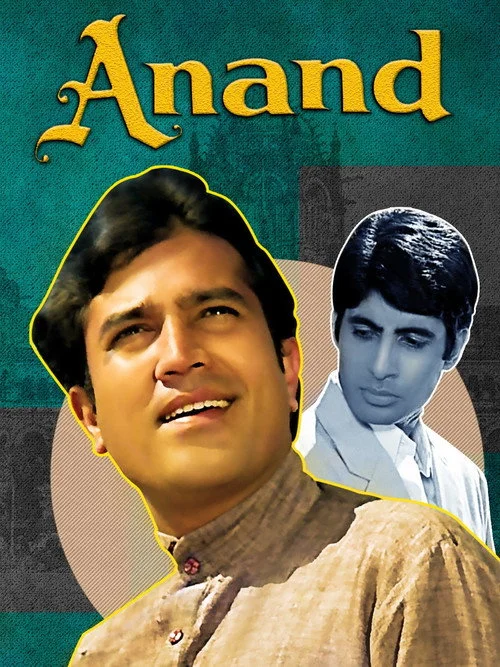
Table of Contents
Quick Facts
Anand, released on 12 March 1971, is the gentlest masterpiece in Hindi cinema — a film about a dying man who teaches everyone around him how to live. Directed by Hrishikesh Mukherjee and starring Rajesh Khanna at the peak of his superstardom alongside a young Amitabh Bachchan, it is a small film with an enormous heart. “Zindagi badi honi chahiye, lambi nahi” — life should be big, not long — is not just a dialogue; it is a philosophy that has comforted millions for over fifty years.
Streaming on Amazon Prime Video, Anand remains one of the most beloved films in Indian history — a guaranteed tearjerker that somehow never feels manipulative. It is the film people recommend when someone is going through a hard time, and the film they rewatch when they need to remember what matters.
Plot
Dr. Bhaskar Banerjee (Amitabh Bachchan) is a serious young doctor treating the poor in Bombay, frustrated by a world that rewards indifference. Into his life walks Anand Sehgal (Rajesh Khanna) — a terminally ill cancer patient with only months to live, who laughs louder, loves harder and lives more fully than anyone Bhaskar has ever met. Anand befriends everyone he encounters: the lonely, the sick, the cynical — and most of all, Bhaskar himself.
The film follows Anand’s final months as he sprinkles joy everywhere he goes — befriending a gruff neighbour, romancing life itself, recording his voice so his laughter outlives him. Bhaskar, the film’s narrator and moral centre, watches his friend fade even as Anand refuses to surrender his spirit. The famous ending — Anand gone, but his recorded laughter filling the room — is one of the most moving finales in Indian cinema, devastating precisely because the film never begs for your tears.
What makes the story extraordinary is its restraint. There are no miracle cures, no melodramatic deathbed speeches — just a man who decided that the time he had left would be spent making other people happy. The film’s power comes from its simplicity.
Performance
Rajesh Khanna gives the defining performance of his career as Anand — radiant, mischievous and heartbreaking, often within the same scene. He makes Anand’s optimism feel like a choice rather than a temperament, which is what gives the character his depth. This is the superstar at his most human, and the role won him the Filmfare Best Actor award. Amitabh Bachchan, then still a rising star, is superb as Dr. Bhaskar — earnest, restrained, and quietly shattered by the end; his narration gives the film its reflective soul.
Sumita Sanyal brings warmth as Renu, and Ramesh Deo is memorable as the doctor who understands Anand’s condition. But the film belongs to its two leads — Khanna’s light and Bachchan’s gravity, in perfect balance.
Screenplay and Direction
Hrishikesh Mukherjee directs with the lightness of touch that defined his best work — no scene is overplayed, no emotion underlined twice. The screenplay (by Mukherjee and Gulzar, who wrote the dialogue) is a model of economy: every conversation reveals character, every small incident builds toward the inevitable ending. The famous dialogues — “Hum aane wale gham ko kheench-taan kar aaj ki khushi pe le aate hain,” “Maut se pehle jeena” — are philosophical without ever sounding like lectures.
The film’s structure is quietly brilliant: told partly in flashback through Bhaskar’s memoir, it lets us experience Anand the way Bhaskar did — as a force of nature who changed him forever. At just over two hours, it is perfectly paced, and its final fifteen minutes are among the most perfectly calibrated passages in Hindi film history.
Music
Salil Chowdhury’s music is exquisite. “Kahin Door Jab Din Dhal Jaye,” “Maine Tere Liye Hi Saat Rang Ke Sapne,” “Zindagi Kaisi Hai Paheli” — Mukesh and Manna Dey sing with a tenderness that matches the film’s mood perfectly. The songs are not interruptions but extensions of Anand’s spirit — each one a small meditation on life, love and mortality.
The film’s visual style is modest and intimate — Bombay chawls, hospital wards, small rooms full of big feelings. Mukherjee’s camera stays close to his actors’ faces, trusting them to carry the weight, and they never let him down.
Themes
Anand is about how to die — and therefore about how to live. Its central argument is that a life’s value is measured in depth, not duration; that joy is a discipline; and that the best response to mortality is generosity. The film also explores the doctor’s dilemma — Bhaskar’s frustration with a system that cannot save everyone — and finds its answer in Anand’s example: you cannot cure everyone, but you can comfort everyone. It is a film about acceptance without resignation, and laughter as an act of courage.
Conclusion
Anand is essential cinema — a film that will make you cry and leave you strangely uplifted. Rajesh Khanna’s immortal performance, Hrishikesh Mukherjee’s humane direction, and a philosophy that only grows more relevant with time make it one of the greatest Hindi films ever made. Watch it with someone you love. And remember: zindagi badi honi chahiye, lambi nahi.