
Milana
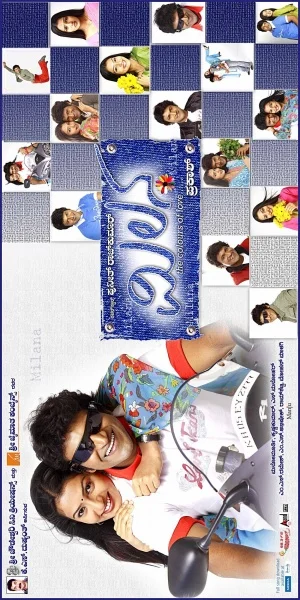
Table of Contents
Quick Facts
Milana is a Kannada romantic comedy drama directed by Prakash, starring Puneeth Rajkumar, Parvathy and Pooja Gandhi. Released on 14 September 2007, it was the first film Puneeth launched after the passing of his father Dr. Rajkumar, and it arrived with enormous emotional weight for his fans. What nobody quite expected was the scale of what followed — Milana became a genuine phenomenon, completing a 500-day theatrical run and standing as the longest-running Indian film in multiplex history at the time, besides ranking among the highest-grossing Kannada films of 2007.
The film is now streaming on ZEE5. It marked Parvathy Thiruvothu’s Kannada debut, paired a maturing Puneeth with a refreshingly adult love story, and gave Mano Murthy one of the defining soundtracks of his career.
Plot
Aakash (Puneeth Rajkumar) and Anjali (Parvathy) are a married couple whose relationship has gone cold — they are headed for a divorce. Aakash is still emotionally tethered to his past: his college-day love Priya (Pooja Gandhi), a relationship that ended but never really left him. Anjali, meanwhile, carries her own unfinished chapter in Hemant (Dileep Raj). Two people sharing a home, a marriage certificate, and almost nothing else.
Life, being life, refuses to let the past stay buried. Circumstances conspire to bring both Priya and Hemant back into Aakash and Anjali’s orbit, and suddenly the couple must confront the question they have been avoiding: is their marriage just an arrangement of convenience, or is there something real underneath the resentment? The film moves between the present-day friction and flashbacks to both characters’ earlier romances, slowly revealing why each of them is the way they are.
The beauty of the story is in its smallness. There are no villains here, no grand conspiracies — just two flawed, likeable people learning that love is less about finding the perfect person and more about choosing the person in front of you, every day. The ending, with Aakash teasing Anjali about a lifetime of her infamous bread-jam cooking, lands the film’s point with a smile: this is what happiness actually looks like — ordinary, imperfect, and chosen.
Performance
Puneeth Rajkumar gives one of the finest performances of his career as Aakash. Known then primarily as an action star with a massive youth following, he strips away the swagger here and plays a vulnerable, confused, often selfish young husband — and he is completely convincing. The restraint in his performance is what stays with you: the way he listens, the pauses, the slow realisation dawning on his face. It won him the Karnataka State Film Award for Best Actor, and it is easy to see why.
Parvathy is a revelation in her Kannada debut. As Anjali, she brings a quiet dignity and emotional intelligence to a role that could easily have been thankless — the wife waiting for her husband to grow up. Instead she makes Anjali the film’s moral and emotional centre. Pooja Gandhi, fresh off the Mungaru Male wave, is effective as Priya, the ghost of a love that was real but belongs to another time. The supporting cast — Dileep Raj, Sumithra, Mukhyamantri Chandru, Rangayana Raghu — fills out the world with warmth and humour.
Screenplay and Direction
Director Prakash, who had earlier made Rishi with Shivarajkumar, shows remarkable maturity here. The screenplay — credited to Prakash and M. S. Abhishek, with dialogues by M. S. Ramesh — treats its characters like adults. Nobody is purely right or wrong; Aakash’s attachment to Priya is understandable, Anjali’s hurt is justified, and the film refuses to judge either of them. The flashback structure is handled cleanly, and the pacing never sags despite the film’s emotional subject matter.
What elevates the direction is its confidence in quiet moments. Prakash lets scenes breathe — a conversation over coffee, a shared silence, a look that lasts a beat too long. The comedy, much of it coming from the couple’s domestic friction and the supporting characters, feels organic rather than inserted. It is the work of a filmmaker who trusts his material and his actors, and that trust pays off in nearly every scene.
Music
Mano Murthy’s soundtrack is nothing short of legendary. “Ninnindale,” sung by Sonu Nigam with lyrics by Jayanth Kaikini, became a gigantic chart-topper and remains one of the most beloved Kannada romantic songs ever recorded. The rest of the album — “Male Nintu Hoda Mele,” “Antu Intu,” “Madarangiyalli” — is equally melodious, and Murthy’s gentle, tune-first style fits the film’s soft texture perfectly. Prakash deliberately chose Murthy because the story demanded melody over trendiness, and the gamble worked spectacularly.
Cinematographer K. Krishnakumar gives the film its warm, lived-in look. The Switzerland-shot song sequences are gorgeous without feeling like tourism ads, and the Bangalore portions have an intimate, naturalistic quality that suits the story. The visuals never overpower the emotions — they simply frame them beautifully.
Themes
At its heart, Milana is about the difference between love as a feeling and love as a choice. Aakash and Anjali both entered marriage carrying old flames, and the film asks a grown-up question: what do you do when the past knocks? Its answer — that commitment is built, not found — is delivered without preaching, and the film gently shows how honesty, even when it hurts, is the only foundation a relationship can stand on.
Conclusion
Milana is that rare romantic drama that respects its audience while delivering every emotional payoff the genre promises. Puneeth’s superb performance, Parvathy’s luminous debut, Prakash’s assured direction and Mano Murthy’s unforgettable music earned its 500-day run one moved viewer at a time. Streaming on ZEE5 — keep tissues nearby; the bread-jam ending gets everyone.