
Bokshi
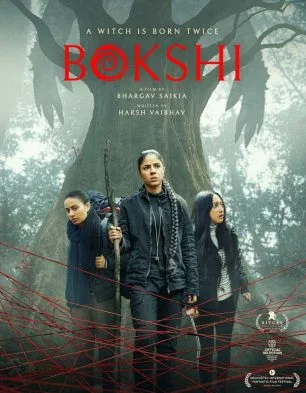
Table of Contents
Quick Facts
Plot
Bokshi is a folk horror film about a troubled teenager named Anahita, played by Prasanna Bisht, whose school trek to a remote prehistoric site in the forests of Sikkim forces her to confront an ancient legend. As myth and reality collide, Anahita encounters witchcraft, spirits and shamans, and the film follows her as she faces both the supernatural world around her and the trauma within her. Mansi Multani and Siddharth Shaw play pivotal roles, with Shernaz Patel lending her voice to the titular Bokshi.
Shot in the dense forests of Sikkim, the film uses real locations and practical effects rather than relying on visual effects, and its horror grows out of the landscape: the mountains, the rituals, and the folklore of a region where the old stories are still alive. The trailer, released ahead of the film’s December opening, promises a chilling journey where the wilderness itself holds secrets the characters are not prepared to uncover.
Performance
Prasanna Bisht, as Anahita, carries the film, and the role demands a great deal: a teenager who is both vulnerable and defiant, whose journey into the forest is also a journey into herself. Bisht’s performance, as shown in the trailer, is physical and emotional, a young actor holding the centre of a film that could easily have been overwhelmed by its setting.
Mansi Multani and Siddharth Shaw give the film its supporting weight, while Shernaz Patel’s voice work as Bokshi gives the horror its presence: a voice can be more frightening than a face, and the film uses that wisely. The ensemble’s job is to make the folklore feel lived-in rather than explained, and the trailer suggests they succeed, letting the audience feel the myth before they understand it.
Screenplay and Direction
Bhargav Saikia, making his feature directorial debut, directs and produces the film under Lorien Motion Pictures, from a script by Harsh Vaibhav, and the film’s long journey is part of its story: it premiered at the International Film Festival Rotterdam in 2025, travelled to genre festivals including Sitges, Neuchâtel and SXSW Sydney, and was developed over several years in Sikkim’s forests. That festival pedigree is rare for an Indian horror film, and it shows in the craft.
The film was originally set for 9 October 2026 but was postponed to 4 December after the Central Board of Film Certification referred it to its Revising Committee over its supernatural themes and violence, and it was cleared with an A certificate and minimal changes. The delay, and the film’s festival history, suggest a work that takes its horror seriously: not a quick scare but an atmospheric, carefully built folk tale, with cinematography by A. Vasanth and Siddharth Sivasankaran and sound design by Dhiman Karmakar.
Music
Advait Nemlekar composes the music, and for a folk horror film, the score must sound like the forest itself: ancient, unsettling, and unlike anything in a city. The film also features dialogue in Hindi, English, Nepali and Boksirit, a constructed language created specifically for the film, and that linguistic richness gives the music a unique palette to work with, blending folk traditions with dread.
Horror scores succeed when they make silence frightening, and Bokshi’s sound design, which the trailer already showcases, seems built for that: the wind, the rituals, the moments where music drops away entirely. If the finished film sustains that atmosphere, its score will be one of its most memorable elements, and a reason to experience it in a cinema rather than on a phone.
Themes
Bokshi is about the collision between the modern world and the ancient one. Anahita is a contemporary teenager, and the film drops her into a landscape where old legends are not stories but forces, asking what happens when a young person raised on reason meets a world that does not obey it. The horror is not just supernatural; it is the realisation that the past is not past, and that some places remember what people try to forget.
It is also a film about trauma as a kind of haunting. Anahita’s journey into the forest mirrors her inner journey, and the witchcraft she encounters can be read as the external shape of her own wounds. That double meaning is what lifts Bokshi above a simple scare film: it uses folklore to talk about healing, and suggests that facing the legend is also facing oneself.
Conclusion
Bokshi releases in select cinemas across India on 4 December 2026, after a festival journey that took it from Rotterdam to Sydney, and it arrives as one of the most distinctive horror films of the year: a folk tale from Sikkim, told with craft, patience and genuine dread. It will share its weekend with Eetha, but its audience is different, and its appeal is specific.
For horror fans who want atmosphere over jump scares, for lovers of folk tales, and for anyone curious about Indian cinema beyond its mainstream, Bokshi is essential viewing. Watch it in a dark cinema, and let the forest do its work.