
Sivaji: The Boss
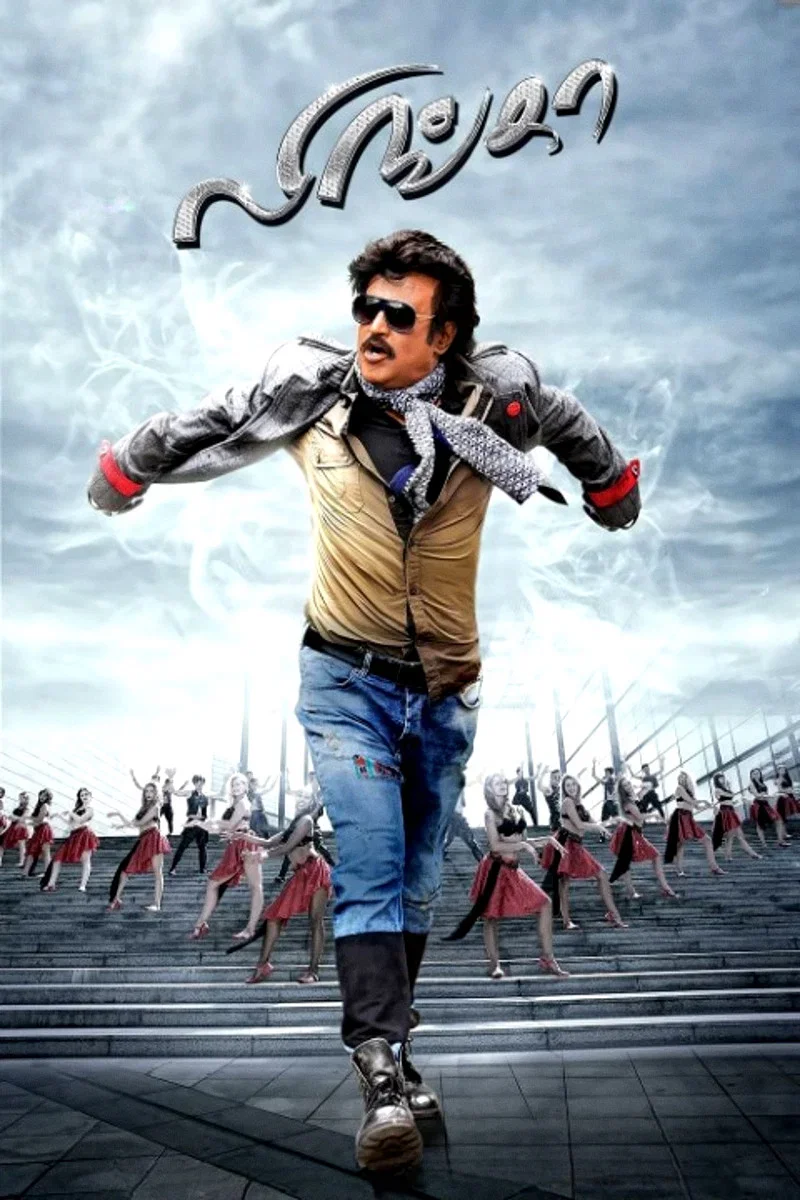
Table of Contents
Quick Facts
Sivaji: The Boss is a Tamil vigilante action film directed by Shankar, starring Rajinikanth as a software engineer who returns from America determined to give away his fortune — and takes on the entire corrupt system when it tries to stop him. Released on 15 June 2007 (after a premiere the previous evening), it was the most expensive Indian film ever made at the time, and it shattered box office records across the globe.
The film is now streaming on Prime Video. What makes Sivaji endure is the dream-team combination it represents: Rajinikanth at the height of his powers, Shankar at his most spectacular, and A. R. Rahman delivering one of his great mass soundtracks — all in service of a fantasy every Indian has entertained: what if one honest rich man decided to fix everything?
Plot
Sivaji Arumugam, a successful software architect in the United States, returns to Chennai with a simple, extraordinary plan: to spend his entire fortune building free hospitals and colleges for the poor. But his noble mission runs straight into Adiseshan, a powerful businessman who controls the state’s education and medical mafias, and who sees Sivaji’s philanthropy as a threat to his empire.
Adiseshan uses every weapon — corrupt officials, forged documents, legal harassment — to destroy Sivaji, and for a while it works: Sivaji loses his money, his reputation and nearly his sanity. But then he stops playing by the rules. Adopting the persona of “Sivaji the Boss”, he masters the very system of black money and corruption that defeated him, turning its weapons against its masters. With the help of his uncle Arivu and his spirited love Tamizhselvi, Sivaji engineers a spectacular downfall for Adiseshan — redistributing ill-gotten wealth to the people it was stolen from.
The film’s second half is a wish-fulfilment fantasy of the most satisfying kind: the honest man beating the corrupt at their own game, with Shankar staging each victory like a festival.
Performance
Rajinikanth is in phenomenal form. The first half asks him to play earnest and idealistic — the NRI with a dream — and he brings a sincerity that grounds the fantasy. The second half unleashes the Boss: the swagger, the one-liners, the famous scenes where he outsmarts entire rooms of villains without raising his voice. The sequence where Sivaji calmly explains black-money economics to a room of industrialists is pure star power — intellect as action.
Suman makes a formidable Adiseshan — cold, articulate, genuinely menacing — giving Rajini an antagonist worthy of him. Shriya Saran is delightful as Tamizhselvi, holding her own in both romance and comedy. Vivek, as the loyal Arivu, provides some of the film’s biggest laughs, while Manivannan and Raghuvaran add weight in key supporting roles.
Screenplay and Direction
Shankar directs like a man with unlimited resources and the imagination to use them. The film’s scale is staggering: the “Athiradee” song alone, with its hundreds of dancers, is a logistical marvel, and the action sequences — particularly the climactic confrontation — are choreographed with Hollywood polish. But Shankar never lets spectacle drown story: the first half’s depiction of bureaucratic corruption is infuriatingly believable, which makes the second half’s revenge all the sweeter.
The screenplay, credited to Shankar with dialogues by Sujatha, is cleverer than it first appears. Sivaji’s turn to black money is presented not as moral compromise but as judo — using the system’s weight against it. The film’s famous line about giving “one rupee to one person” economics may be simplistic, but as populist fantasy it is irresistible.
Music
A. R. Rahman’s soundtrack is one of the great Tamil mass albums. “Athiradee” is an adrenaline rush, “Vaaji Vaaji” a stylish romantic number, “Sahana” a classical-tinged melody of rare beauty, and “Balleilakka” — with its folk energy and Na. Muthukumar’s playful lyrics — became the decade’s definitive celebration song. The background score gives Sivaji’s elevation scenes a thunderous, almost mythic quality.
Rahman’s genius here is range: the same composer who writes the delicate “Sahana” also produces the earth-shaking Boss theme, and both feel unmistakably like Sivaji.
Themes
Sivaji is about corruption as a system and the fantasy of beating it. The film argues, with Shankar’s characteristic bluntness, that honesty alone cannot defeat entrenched power — you must understand the machinery to dismantle it. It is also about the moral ambiguity of means and ends: Sivaji becomes a black-money operator to fund his charity, and the film is honest enough to let that contradiction sit unresolved. Beneath the spectacle, it is a deeply Indian fantasy — the righteous rich man as Robin Hood.
Conclusion
Sivaji: The Boss is the ultimate Shankar-Rajinikanth spectacle — big, brash, hugely entertaining and secretly smarter than it looks. It gave Tamil cinema some of its most iconic moments, its biggest box office records and a soundtrack for the ages. If Baashha made Rajinikanth a phenomenon, Sivaji made him a global one. Pure, glorious mass cinema.
No official trailer is available for this film on a studio or rights-holder channel, so no video is embedded here. We would rather leave the space empty than link to a fan-made upload.