
Nagabandham: The Secret Treasure
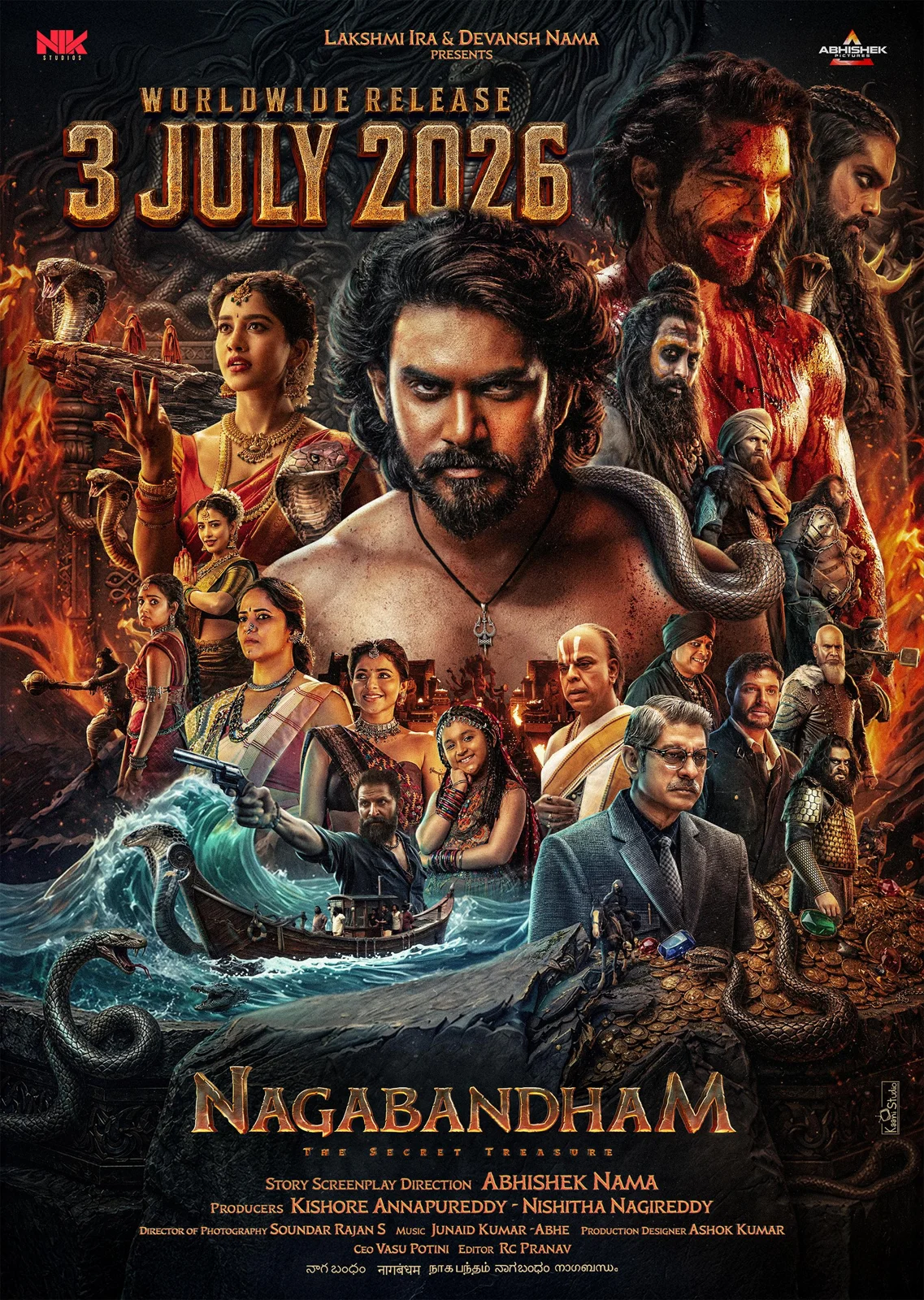
Table of Contents
Quick Facts
Plot
Nagabandham: The Secret Treasure opens in the world of India’s ancient Vishnu temples, where a sacred ritual called Nagabandham has guarded a hidden treasure for centuries. Rudra, played by Virat Karrna, is drawn into a quest for the mystical Brahma Kamalam, a relic of immense divine significance that powerful forces want to claim for themselves. The journey takes him through temple corridors, forgotten histories and the shadowy world of Naga Sadhus who protect the sacred secret.
As Rudra follows the trail of the treasure, he discovers that the quest is not only about gold or power. The temples hold stories of faith, sacrifice and guardianship, and the people around him, including the women played by Nabha Natesh and Iswarya Menon, each carry their own connection to the mystery. Ancient rivals emerge, willing to use violence and deception to seize the relic, and Rudra must decide what the treasure is truly worth.
The film builds toward a large-scale confrontation in which divine forces intervene and the guardians of the temple rise to protect what is sacred. The treasure, it turns out, is protected not by locks but by belief itself, and Rudra’s journey becomes one of understanding his own place in a tradition far older than himself.
Performance
Virat Karrna carries the film with confidence. He has the physical presence the role demands, and he plays Rudra’s transformation from seeker to protector with sincerity. The film asks a lot of him, including long action passages and scenes of devotional intensity, and he meets those demands with a screen presence that keeps the audience invested even when the story grows complicated.
Nabha Natesh and Iswarya Menon give the quest its emotional grounding, while Jagapathi Babu, Mahesh Manjrekar and Murali Sharma bring weight to the world around Rudra. The ensemble understands the film’s tone, playing the mythology straight rather than winking at it, which is exactly what a story like this needs to work.
Screenplay and Direction
Abhishek Nama directs Nagabandham on an ambitious scale. The production design is lavish, the temple settings are beautifully realised, and the visual effects create a world that feels both ancient and alive. The film’s greatest strength is its atmosphere: stone corridors, ritual imagery and a sense of sacred mystery that pulls the audience into the quest.
Where the film struggles is in its storytelling. At over three hours, the narrative becomes sprawling, with too many flashbacks and side tracks that slow the treasure hunt. Critics noted that the screenplay could not always support the scale of the vision. Still, Nama’s ambition deserves credit: this is a film that dares to build a mythological universe from scratch, and its visual imagination is genuinely impressive.
Music
The music, composed by Abhe with background score by Junaid Kumar, blends devotional feeling with adventure. Songs like Sura Sura and Namo Re give the film its spiritual colour, while the score underlines the mystery and tension of the quest. The sound design, with temple bells and ritual chants woven into the action, helps create the film’s distinctive atmosphere.
The soundtrack works best when it leans into the sacred side of the story. The devotional passages feel authentic, and they give the temple sequences a grandeur that the visuals alone could not achieve. It is a score that understands the film is, at heart, about faith as much as it is about treasure.
Themes
Nagabandham is about the difference between possessing something sacred and protecting it. The villains want the treasure for power; the guardians protect it because it belongs to faith itself. The film suggests that some things lose their meaning the moment they are owned, and that tradition survives only when people serve it rather than exploit it.
The film also explores the meeting point of mythology and history. The Vishnu temples are presented not as museum pieces but as living places, full of stories that still shape the people who worship there. Rudra’s journey is, in the end, a journey into that living tradition, and the film’s most affecting moments come when it treats faith with genuine respect rather than as decoration.
Conclusion
Nagabandham: The Secret Treasure is an ambitious, visually striking mythological adventure. Its scale, atmosphere and Virat Karrna’s committed performance make it worth watching for fans of grand Telugu fantasy, even if the storytelling does not always match the spectacle. The temple world it creates is memorable, and its devotional heart is sincere.
If you enjoy mythology-driven adventures with big visuals and a sacred mystery at their centre, give this one a try. It is a film that reaches for something large, and its best moments genuinely soar.