
Lenin
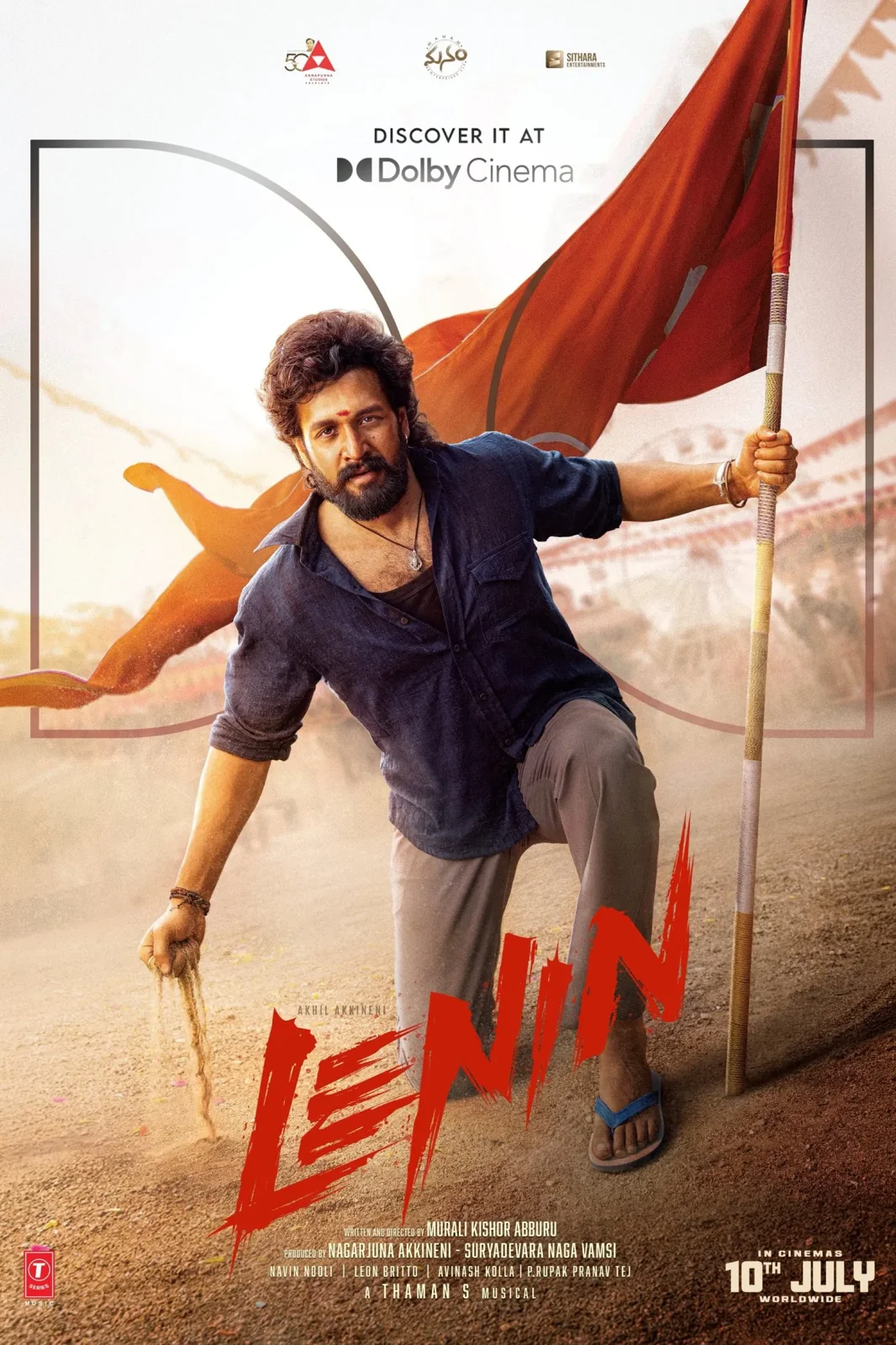
Table of Contents
Quick Facts
Plot
Lenin is set in Srirampuram, a village in the Chittoor district where life revolves around Bharatam Metta, the eighteen-day festival dedicated to Goddess Draupadi, during which no blood is to be shed. The film opens with Lenin, played by Akhil Akkineni, walking out of prison, a man the whole village fears and brands an outsider. In a bar, a curious young boy asks him about his past, and Lenin begins to tell the story that made him who he is.
Years earlier, Lenin was an orphan adopted by Jayanthi, the village’s most respected woman, and raised alongside her son Vasanth like a brother. During the festival, Lenin falls in love with Bharathi, and the two plan a future together. But hidden rivalries, a scheming MLA and the ambitions of people Lenin trusted turn love into tragedy. A murder during the festival, a betrayal by his own foster brother and a sacrifice Lenin makes to protect the people he loves send him to prison for a crime that was not truly his.
Back in the present, Lenin’s story becomes a plan. The men who destroyed his life are gathered in that very bar, and Lenin, now blind from a chemical attack during his imprisonment, has arranged their reckoning. The film builds to a violent, emotional confrontation in which Lenin settles every score, and the village finally learns the truth about the man it condemned.
Performance
Akhil Akkineni delivers the most mature performance of his career as Lenin. He plays the character across two timelines, first as a spirited young man in love, then as a hardened, blind avenger telling his own story. The physical transformation is striking, but it is the restraint that impresses: Akhil lets the pain sit quietly behind the anger, and the scenes with Bharathi have a tenderness that makes the later tragedy hit hard.
Bhagyashri Borse is lovely as Bharathi, and her chemistry with Akhil gives the romance its weight. Pramod Panju is chilling as Vasanth, the foster brother whose jealousy curdles into villainy, while Easwari Rao brings authority and warmth to Jayanthi. Sivaji, Sunil and Brahmaji round out a strong supporting cast that makes Srirampuram feel like a real place with real grudges.
Screenplay and Direction
Murali Kishor Abburu directs Lenin with ambition. The non-linear structure, with Lenin narrating his past to a boy in a bar, gives the film a storyteller’s rhythm, and the festival setting provides a rich backdrop of ritual, rivalry and honour. The first half, with its romance and village politics, is engaging, and the reveal of Vasanth’s betrayal is genuinely shocking.
The film does lean on the mass-action template in its second half, and some stretches of the narrative feel familiar. But Abburu keeps the emotional core in view: this is a story about a man who loses everything and refuses to lose himself. The climax, with a blind Lenin facing his enemies, is staged with conviction, and the final image of Lenin walking away with his dog is haunting in the best way.
Music
Thaman S composes a score that matches the film’s scale. The songs, including Vaarevaa Vaarevaa and the rousing Soul of Lenin, became popular before release, and the background score drives the action sequences with real energy. Thaman understands the Rayalaseema setting, and his music gives the festival scenes their grandeur and the fight scenes their pulse.
The score is at its best in the emotional passages, where it stays restrained and lets Akhil’s performance breathe. In the climax, the music swells without drowning the drama, and the combination of sound and image in Lenin’s final confrontation is one of the film’s high points. It is a soundtrack that serves both the mass moments and the quiet ones.
Themes
Lenin is about loyalty, betrayal and the price of love. The festival rule that no blood be shed during Bharatam Metta becomes a bitter irony: the village that worships a sacred tradition is willing to break it for power and jealousy. Lenin’s journey asks what happens when the people who raised you turn against you, and whether revenge can ever truly balance the scales.
The film also explores identity. Lenin is an orphan who is given a family and then cast out of it, and his blindness in the present becomes a powerful symbol: a man who can no longer see the world he lost, but who sees the truth about it more clearly than anyone. It is a dark, mythic story, borrowing its shape from the Mahabharata, and it treats its hero’s suffering with unusual seriousness for a commercial film.
Conclusion
Lenin is a rugged, emotional rural action drama and a turning point for Akhil Akkineni. It opened to the biggest opening of his career and became his highest-grossing film, and it is easy to see why audiences responded: this is a star performance with real weight behind it, supported by a strong cast and Thaman’s rousing score.
For fans of rooted, intense Telugu action dramas, Lenin is a strong watch. It is long and at times familiar, but its emotional core and its unforgettable climax make it worth the time. Streaming on ZEE5, it is ready for your watchlist.