
Mughal-e-Azam
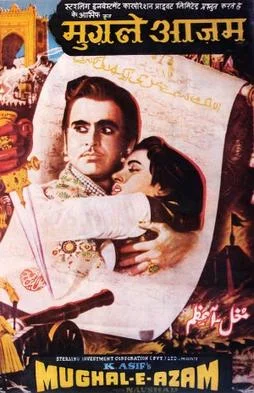
Table of Contents
Quick Facts
Mughal-e-Azam, released on 5 August 1960, is Indian cinema’s greatest monument — a film so grand in ambition and execution that it took nearly a decade to make and became, on release, the highest-grossing Indian film of its time. Directed by K. Asif, it tells the tragic love story of Prince Salim and the courtesan Anarkali against the immovable will of Emperor Akbar. It remains, more than six decades later, the benchmark for epic filmmaking in India, a film of palaces, poetry and passion that no one has ever quite matched.
The film is available on ZEE5 and ShemarooMe (free with ads), and it rewards viewing on the biggest screen you can find. This is cinema as spectacle and as literature — Dilip Kumar and Madhubala’s doomed romance played out in Urdu of impossible beauty, with Naushad’s music giving every emotion its perfect voice. It is not a film you watch; it is a film you attend.
Plot
Emperor Akbar (Prithviraj Kapoor) has long prayed for an heir, and when Prince Salim (Dilip Kumar) is born, the empire rejoices. But Salim grows into a willful, romantic prince who falls in love with Anarkali (Madhubala), a court dancer — a match the Emperor considers impossible and insulting. When Salim refuses to renounce her, father and son are set on a collision course that shakes the Mughal court to its foundations.
The heart of the film is the confrontation between Akbar’s imperial duty and Salim’s defiant love — and between Anarkali’s devotion and her knowledge that loving a prince can only end in ruin. The famous sequence where Anarkali sings “Pyaar Kiya To Darna Kya” in the Sheesh Mahal, mirrors glittering around her as she declares her love before the court, is one of the most breathtaking set-pieces in all of cinema. The film builds to a trial, a sentence of being walled alive, and an ending that is both merciful and heartbreaking.
What elevates the story is that no one is a villain. Akbar is not cruel — he is an emperor bound by the weight of the throne. Salim is not merely rebellious — he is a man who has found the one thing worth defying an empire for. The tragedy plays out with Shakespearean gravity, and every line of dialogue lands like poetry.
Performance
Dilip Kumar’s Salim is a study in restrained intensity — proud, passionate, and heartbroken by turns, with a command of Urdu dialogue that remains unmatched. His scenes with Prithviraj Kapoor crackle with the weight of two generations of acting royalty. Kapoor’s Akbar is monumental: booming, imperious, yet visibly wounded by the conflict between his love for his son and his duty as emperor. It is one of the great screen portrayals of power.
Madhubala gives the performance of a lifetime as Anarkali — radiant, defiant, and achingly vulnerable, she holds her own against both giants and owns the film’s most famous sequences. Her beauty is legendary, but it is her emotional courage that makes Anarkali immortal. Durga Khote, as the empress caught between husband and son, brings quiet dignity to a role that could easily have been thankless.
Screenplay and Direction
K. Asif’s direction is operatic in the best sense — every frame is composed like a painting, every camera movement deliberate, every set (the Sheesh Mahal alone is legend) built to overwhelm. He spent years on this film, and the obsession shows in the best possible way. The dialogue, written in chaste, musical Urdu, is itself a character in the film; lines from Mughal-e-Azam are still quoted at mushairas and weddings.
The pacing is stately rather than slow — Asif trusts his audience to sit inside a moment, to feel the weight of a pause before a pronouncement. At nearly three and a half hours, the film never drags because every scene is doing double duty: advancing the plot and deepening the tragedy. The 2004 colourised restoration proved the film’s timelessness to a new generation.
Music
Naushad’s score is one of the crowning achievements of Hindi film music. “Pyaar Kiya To Darna Kya,” “Teri Mehfil Mein,” “Mohe Panghat Pe” — Lata Mangeshkar sings as though the songs were written into her soul, and the classical rigour of the compositions (Bade Ghulam Ali Khan himself sang “Prem Jogan Ban Ke” for the film) gives the soundtrack a grandeur that popular music rarely attempts. The music does not accompany the film; it completes it.
Visually, the film is staggering — the black-and-white cinematography gives the palaces a moonlit majesty, the battle sequences have genuine scale, and the Sheesh Mahal sequence, with its thousand mirrors, remains one of the most beautiful things ever filmed in India.
Themes
Mughal-e-Azam is about love versus power — and about how both love and power demand total surrender. Akbar and Salim are mirror images: one cannot bend the empire, the other cannot bend his heart. The film also meditates on the cruelty of class — Anarkali’s only crime is being born a dancer — and on the terrible loneliness of absolute authority. It asks whether a throne is worth the price it exacts, and answers with a tragedy that still stings.
Conclusion
Mughal-e-Azam is the Everest of Indian epics — a film of impossible scale, immortal music, and performances that define an era. It is long, it is grand, and it is utterly unmissable. Watch it to understand what Indian cinema aspired to at its most ambitious, and to witness a love story that treats passion with the seriousness it deserves. Some films age; this one endures, glittering like the Sheesh Mahal itself.