
City Lights
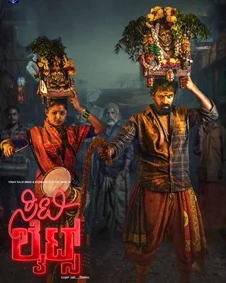
Table of Contents
Quick Facts
Plot
City Lights follows two innocent youngsters who leave their village for Bengaluru, carrying little more than hope and each other. The city they imagined, bright, busy, full of promise, turns out to be a very different place up close. In the Majestic area and the city’s margins, they face survival pressures that no village could have prepared them for: work that exploits, landlords who do not care, and a crowd that walks past suffering without breaking stride. The lights are bright, but they do not warm everyone.
As the two young people navigate this new world, their bond is tested by everything the city throws at them. Romance grows between them, but it grows in hard soil, and the film follows their struggle with honesty rather than sentimentality. They meet people living on the edges of the city, people whose stories rarely make it to the screen, and through those encounters the film widens its lens from one couple’s story to a portrait of Bengaluru itself.
Performance
Vinay Rajkumar plays the young hero with a sincerity that suits the character’s innocence. He does not play a street-smart city boy; he plays a villager learning the city the hard way, and his confusion, hope, and hurt all read as genuine. Opposite him, Monisha Vijaykumar matches him with a performance full of quiet resilience. Together, they make a couple the audience wants to protect, which is exactly why watching the city test them is so painful.
Umashree, one of Kannada cinema’s most respected actors, brings gravity to the supporting cast, while Veera Devaraj and Vasantha Krishnamurthy add texture to the world around the young couple. The ensemble avoids melodrama, playing the city’s harshness with restraint. That restraint is the film’s strength: the performances trust the audience to feel the injustice without being told how to feel about it.
Screenplay and Direction
Duniya Vijay, known to audiences as an action star, directs City Lights with a surprising tenderness. He clearly knows Bengaluru’s streets from the inside, and he films the Majestic area and the city’s margins with the eye of someone who has seen both their energy and their cruelty. The direction favours observation over spectacle: long looks at crowded streets, quiet moments in small rooms, and the slow realisation that the city does not care about your dreams.
The screenplay keeps the story grounded in the couple’s experience rather than drifting into lecture. When the film turns to the lives of people on the margins, it does so through encounters that feel natural, not staged for effect. The pacing is gentle, which suits a story about endurance rather than escape. Some viewers may wish for more incident, but the film’s patience is deliberate: survival, after all, is mostly a matter of getting through one more day.
Music
Charan Raj composes the music for City Lights, and his soundtrack is one of the film’s most distinctive features. It blends folk traditions with rap, two sounds that seem far apart but meet perfectly in a story about villagers arriving in a modern city. The folk elements carry the couple’s roots, the world they left behind, while the rap carries the city’s pulse, its speed, its anger, and its energy. Together, they tell the story in sound.
The songs do not decorate the film; they comment on it. A folk melody in a crowded bus station, a rap verse over images of the city’s underbelly: the music gives voice to characters who often have no voice in the city around them. Charan Raj’s score understands that this is a film about two worlds colliding, and it lets both worlds sing. It is a soundtrack that stays with you because it sounds like the city itself.
Themes
City Lights is, above all, a film about acceptance. Its message extends beyond the central couple to everyone the city pushes to its margins, including transgender people and sex workers, whose struggles the film treats with dignity rather than pity. The film asks a simple question: who does the city belong to? If the answer is only the rich and the lucky, then the lights are a lie. If it belongs to everyone, then acceptance is not charity; it is justice.
The film also explores migration, that great Indian story of leaving home for a better life. The two youngsters are not foolish for coming to Bengaluru; they are brave, and the film honours that bravery even as it shows the price they pay. The village and the city are not simple opposites here, one good and one bad. Both have warmth and both have cruelty, and the film’s honesty about that complexity is what makes its message land. Survival, it suggests, is not about the place; it is about the people who refuse to let go of each other.
Conclusion
City Lights is a gentle, humane drama that deserves attention in a season of louder films. Duniya Vijay directs with unexpected tenderness, Vinay Rajkumar and Monisha Vijaykumar make a genuinely moving couple, and Charan Raj’s folk-meets-rap soundtrack gives the film a sound all its own. It is not a film that shouts; it is a film that observes, and its observations stay with you.
For viewers who value stories about real people in real cities, City Lights is well worth a theatrical watch. It is a reminder that behind every bright light in Bengaluru, there is someone trying to survive in its shadow, and that their story deserves to be told with dignity.