
Video
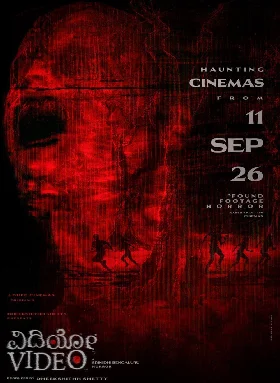
Table of Contents
Quick Facts
Plot
Video begins like a joke and ends like a nightmare, and that shift is exactly what makes it work. A group of vloggers, chasing content for their channel, decides to enter a supposedly haunted school during a lunar eclipse. They are young, confident, and armed with cameras instead of common sense. The school has a reputation, the eclipse has its superstitions, and the combination is too tempting for content creators who measure danger in views and likes. What starts as a fun shoot quickly turns into something they cannot switch off.
The film is shot in the found-footage format, using twelve cameras to capture the night from every angle. Originally titled Blog, it understands its characters perfectly: these are people who film everything, and so the horror arrives through their own lenses. The first twenty minutes are deliberately comic, full of banter and bravado, which makes the turn into horror hit much harder. By the time the group realises they are not alone in the school, the audience is already trapped with them.
Performance
Found-footage horror lives or dies on whether its actors feel like real people, and the cast of Video understands that. Bharath K Tumkur leads the group with the easy confidence of a vlogger who has never faced a real consequence, and Jeevan Shivakumar, Tejesh S M, Priya J Achar, and Nalme Nachiyar fill out the crew with distinct personalities. They bicker, joke, and panic in ways that feel improvised rather than scripted, which is the highest compliment for this genre.
The performances work because they are not trying to be heroic. These are ordinary young people in an extraordinary situation, and their fear feels genuine precisely because their earlier comedy felt genuine too. When the tone shifts, the actors shift with it, and the panic in the later scenes is convincing. For a film with no big stars, the cast carries the entire experience on their shoulders, and they do it well.
Screenplay and Direction
Director Srinidhi Bengaluru makes a bold formal choice and commits to it fully. Twelve cameras, no conventional background score, and a found-footage structure mean there is nowhere to hide: no swelling music to tell the audience when to be scared, no cutaways to comfort them. The horror has to come from what the cameras see and what they miss, and Bengaluru builds dread patiently, letting empty corridors and unexplained sounds do the work that a score usually does.
The screenplay’s structure is clever. The comic opening is not filler; it is the trap. By making the audience laugh with these vloggers for twenty minutes, the film earns their trust, and then it breaks that trust completely. The lunar eclipse setting adds a layer of atmosphere, and the haunted school, a location every viewer remembers from childhood, gives the fear a familiar shape. It is a small film with a disciplined idea, and that discipline is its strength.
Music
Video has no conventional background score, and that absence is the film’s bravest sound decision. Prasanna Kumar M S is credited with the music, but the real soundscape of the film is footsteps, whispers, camera static, and silence. In a genre where composers usually signal every scare with a loud sting, the decision to withhold music makes the horror feel uncomfortably real. The audience cannot lean on a score to tell them when danger is coming, because danger in this film does not announce itself.
When sound does appear, it matters more because of its rarity. A distant noise in an empty classroom, a camera feed cutting out, a voice where no voice should be: these moments land harder without musical cushioning. The sound design becomes the score, and it is a reminder that silence, used well, is the most frightening sound in horror cinema. For viewers used to loud horror films, Video’s quiet approach will feel refreshingly unsettling.
Themes
Beneath the scares, Video is a film about the content economy and its costs. Its characters enter a haunted school not because they are brave, but because they need footage, and the film quietly asks what happens when the hunger for views overrides basic self-preservation. The vloggers film everything, and the film suggests that filming everything is itself a kind of blindness: when you experience life through a lens, you stop seeing what is right in front of you.
There is also a theme of belief. The lunar eclipse, the haunted school, the local legends: the film plays with the line between superstition and reality, and it lets the audience decide where that line falls. Are the characters victims of a real haunting, or of their own reckless curiosity? The found-footage format keeps the answer ambiguous, and that ambiguity lingers long after the final frame. The scariest idea in Video is not a ghost; it is the thought that we might walk into danger willingly, camera in hand.
Conclusion
Video is a smart, disciplined horror film that punches above its weight. Its found-footage format, twelve-camera approach, and refusal to rely on a conventional score make it stand out in a crowded genre, and its comic opening makes its horror land with real force. For Kannada horror fans, it is one of the more interesting genre experiments of the year, and it proves that a small budget is no barrier to genuine scares.
Now streaming on Amazon Prime Video after its theatrical run, Video is perfect for a late-night watch, preferably with the lights off and the volume up. Just do not blame us if you start hearing footsteps in empty corridors afterwards.