
Happy Days (2007) – Movie Info, Cast, Trailer & Where to Watch
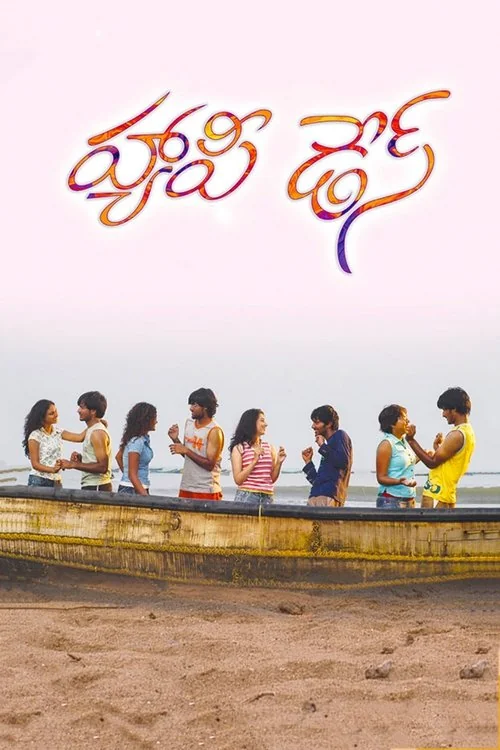
Table of Contents
Quick Facts
Happy Days is a Telugu coming-of-age drama directed by Sekhar Kammula, following a group of engineering students through four years of college life. Starring newcomers Varun Sandesh, Tamannaah Bhatia, Nikhil Siddharth and Rahul Haridas, with music by Mickey J. Meyer, it released on 2 October 2007 and became a cultural phenomenon — the film an entire generation of students claimed as its own.
The film currently streams on Prime Video and Sun NXT. Joyful, nostalgic and painfully honest about youth, Happy Days turned its unknown cast into overnight stars and remains the most beloved campus film in Telugu cinema history.
Plot
Four boys arrive at an engineering college with four different dreams and one shared terror: the seniors. What follows is the full arc of campus life, compressed into one affectionate film — the ragging and the rebellion against it, the canteen friendships that become family, the first crushes that feel like destiny, the exams that arrive like natural disasters, the festivals, the fights, the slow forging of identities.
Sekhar Kammula structures the film as a four-year journey, and each year has its own emotional weather. The romances bloom and wither with the seasons: the shy boy’s tentative courtship, the campus couple everyone envies, the love that must survive parental opposition and the greater enemy — growing up. Around them, the group navigates everything college throws at them, from draconian wardens to the first taste of real failure.
The final year brings placements, farewells and the film’s justly famous emotional climax. Kammula understands the peculiar grief of graduation — that you can be desperate to leave a place and devastated to go, simultaneously — and the closing passages, as the friends scatter toward their futures, have undone even the most hardened viewers. Happy Days ends where every college story ends: at the gate, looking back.
Performance
The film’s great gamble — casting complete newcomers in every major role — paid off spectacularly. Varun Sandesh brings an effortless, lived-in charm to his role as one of the group’s anchors; he feels less like an actor than like someone you actually went to college with. Tamannaah Bhatia, in one of her earliest roles, is luminous — natural, funny and heartbreaking by turns, announcing a star in the making.
Nikhil Siddharth and Rahul Haridas complete the core group with performances that understand exactly what the film needs: not polish, but truth. The supporting cast of seniors, professors and parents is uniformly excellent, but the film belongs to its youngsters — their rawness is the point, and Kammula was wise enough to protect it rather than polish it away.
Screenplay and Direction
Kammula’s screenplay is built from observation rather than invention, and that is its genius. Every scene feels remembered rather than written — the specific cruelty of a ragging ritual, the specific euphoria of a fest night, the specific awkwardness of telling your parents your marks. The film’s episodic structure mirrors memory itself: not a plot, but a collage of moments that add up to four years.
The direction is warm without being soft. Kammula never sentimentalises student life — the film is honest about its pettiness, its pressures and its heartbreaks — but his affection for his characters is boundless. He directs his newcomers with a light, trusting touch, and the campus itself is shot with documentary-like authenticity. It is the rare commercial film that feels like a home movie in the best sense.
Music
Mickey J. Meyer’s score was the making of both the film and the composer. The songs — youthful, melodic, instantly singable — became the soundtrack of college life across Andhra Pradesh in 2007, blaring from every hostel corridor and canteen. The music understood its audience perfectly: it sounded like being nineteen felt.
What elevates the album beyond nostalgia is its emotional range. The celebratory numbers capture the euphoria of friendship, the romantic tracks the dizzy vulnerability of first love, and the farewell songs — oh, those farewell songs — have made grown adults weep in theatres and at reunions alike. It is rare for a debut composer to deliver a score this complete; Meyer never quite topped it, because how could he?
Themes
Happy Days is about the brief, unrepeatable season when friendship is the whole of life. The film’s thesis is simple and devastating: these will be the best days of your life, and you won’t know it until they’re over. Every joke lands a little harder and every farewell hurts a little more because the film never lets you forget the clock is ticking.
It is also, quietly, about class and aspiration — about what an engineering seat means to middle-class families, and the weight of expectation young shoulders carry. But mostly it is about us, at nineteen: certain we knew everything, discovering we knew nothing, and loving every minute of the discovery.
Conclusion
Happy Days is the campus film by which all Telugu campus films are still judged — funny, moving and so true to student life that entire batches adopted it as their own biography. It made stars of its newcomers, gave Mickey J. Meyer a career, and gave Sekhar Kammula his biggest success. Streaming on Prime Video and Sun NXT, it remains what it always was: four years of your life, compressed into three hours, with all the laughter and ache intact.