
Godavari (2006) – Movie Info, Cast, Trailer & Where to Watch
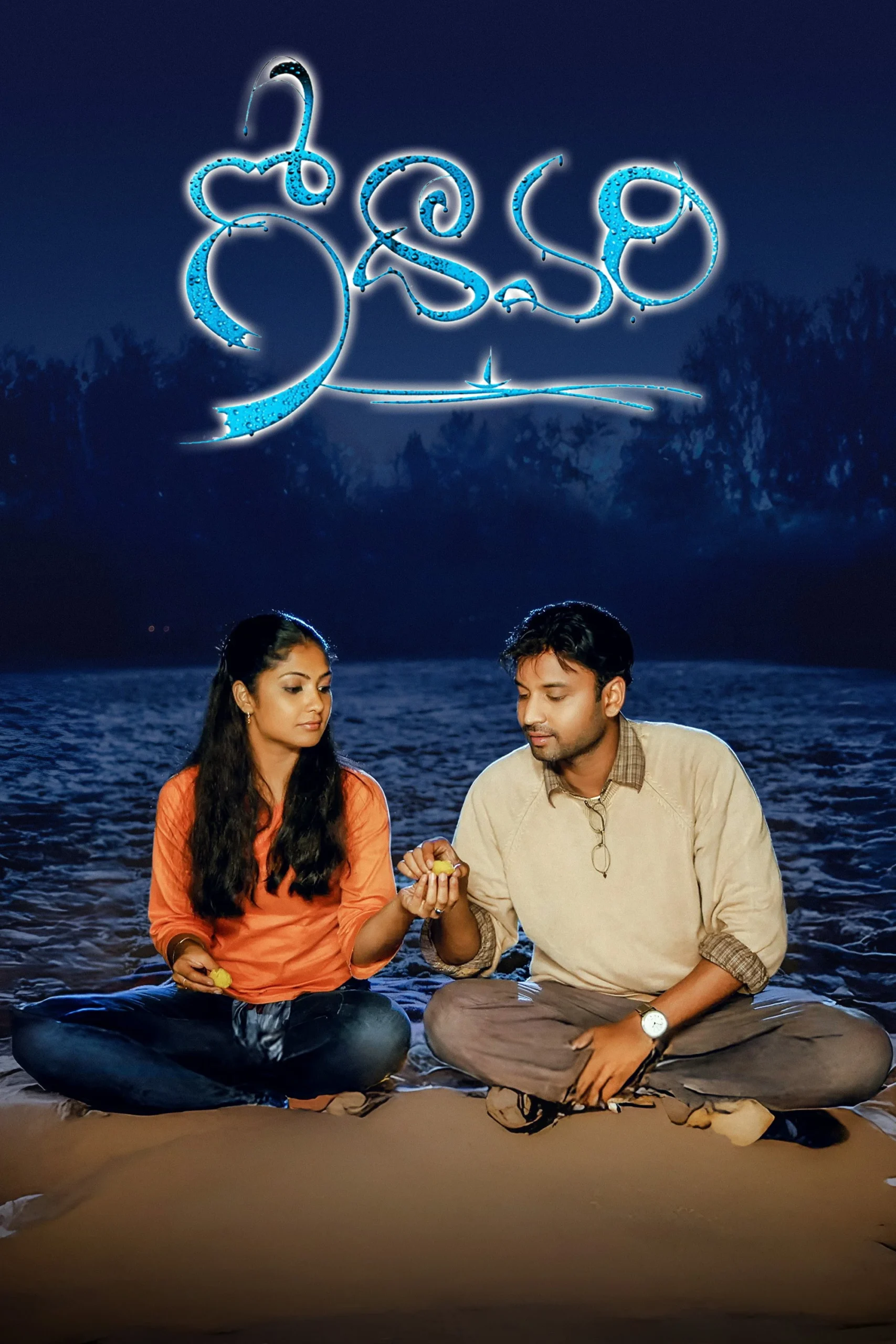
Table of Contents
Quick Facts
Godavari is a Telugu romantic drama directed by Sekhar Kammula, starring Sumanth and Kamalinee Mukherjee, with Neetu Chandra in a key role. Released on 19 May 2006, it was a critical darling that grew into a beloved classic — the rare romance that finds its love story on a slow boat up a great river.
The film currently streams on MX Player and ZEE5. Patient, poetic and quietly funny, Godavari is that most precious of things: a love story for grown-ups, set against one of the most beautiful backdrops Indian cinema has ever filmed.
Plot
Sreeram (Sumanth) is a man with a plan: a sensible arranged match, a sensible career, a sensible life. On his way to meet his prospective bride’s family, he boards a boat journeying up the Godavari — and finds his careful plans thoroughly disrupted by Seetha (Kamalinee Mukherjee), a fiercely independent young woman travelling the same river for her own reasons. She talks too much, feels too much and believes in far too much; he finds her exhausting. She finds him dull. The river, unhurried, has other ideas.
Sekhar Kammula lets the romance develop at the pace of the boat itself — over shared meals, riverside stops, conversations that start as arguments and end as confessions. Around the central pair, the film sketches a whole floating world: fellow passengers with their own longings, crew members with their own wisdom, and the Godavari flowing past it all, ancient and indifferent and somehow complicit.
The complication, when it comes, is the sensible life Sreeram was travelling toward — embodied by Raji (Neetu Chandra) — set against the inconvenient, illuminating thing happening on the boat. The film’s resolution is characteristically gentle: no villains, no melodrama, just two people finally honest with themselves about what they want. The river keeps flowing either way.
Performance
Sumanth gives the performance of his career as Sreeram — understated, wry, quietly aching. He plays a man who has organised his life to avoid feeling too much, and the slow dismantling of that organisation across the boat journey is rendered in the smallest of gestures: a glance held too long, a smile that arrives before he can stop it. It is a masterclass in restraint.
Kamalinee Mukherjee matches him beat for beat as Seetha — sharp, spirited, vulnerable in ways she works hard to hide. Their chemistry is of the slow-burn kind, built on bickering that is clearly flirtation and silences that are clearly longing. Neetu Chandra brings warmth and complexity to the third point of the triangle, and the boat’s crew of supporting characters — each with their own small story — makes the journey feel populated and real.
Screenplay and Direction
Kammula’s screenplay is a triumph of patience. He understands that a love story set on a slow boat cannot be rushed, and he has the courage to let scenes breathe — to let two people simply talk, or not talk, while one of India’s great rivers does the visual storytelling. The dialogue is naturalistic and often very funny, with the leads’ verbal sparring providing the film’s comedy and its courtship at once.
The direction is equally assured. Kammula shoots the Godavari with the devotion of a pilgrim — dawn mists, temple ghats, water like hammered silver — without ever letting the beauty become a travelogue. Every frame serves the feeling: that these two people are being slowly, gently, inevitably changed by the journey. It is filmmaking of rare confidence and rarer tenderness.
Music
K. M. Radha Krishnan’s music is the film’s soul. The songs — rooted in folk and classical textures rather than filmi bombast — feel like they rise out of the river itself, and they are staged with a restraint that lets the landscape do half the work. The album was a slow-burn success, the kind listeners discover and then cannot stop returning to.
The background score is even more remarkable: spare, watery, almost ambient. Kammula uses silence as confidently as sound, and Radha Krishnan’s score knows when to disappear entirely and let the Godavari’s own music — the water, the wind, the boat — take over. It is film scoring as an act of humility, and it is beautiful.
Themes
Godavari is a film about the examined life — about what happens when a man who has planned everything meets a woman who has planned nothing, on a river that has seen every plan dissolve. Sreeram’s journey is from control to surrender, and the film suggests, gently, that the best things in life arrive unplanned, like a fellow passenger you didn’t want to talk to.
The river is the film’s great metaphor and its great character: constant yet always changing, carrying everyone toward somewhere they didn’t expect. In the end, Godavari argues that love is not a decision but a current — you can fight it, or you can let it take you. Few films have made surrender sound so wise.
Conclusion
Godavari is Sekhar Kammula’s gentlest film and, for many, his finest — a romance that moves at the speed of a river and trusts its audience to come along. Sumanth and Kamalinee Mukherjee are wonderful, the Godavari itself is unforgettable, and Radha Krishnan’s music lingers like the smell of rain. Streaming on MX Player and ZEE5, it is the perfect antidote to loud cinema: a film that proves whispering can be more romantic than shouting.