
Ala Vaikunthapurramuloo (2020) – Movie Info, Cast, Trailer & Where to Watch
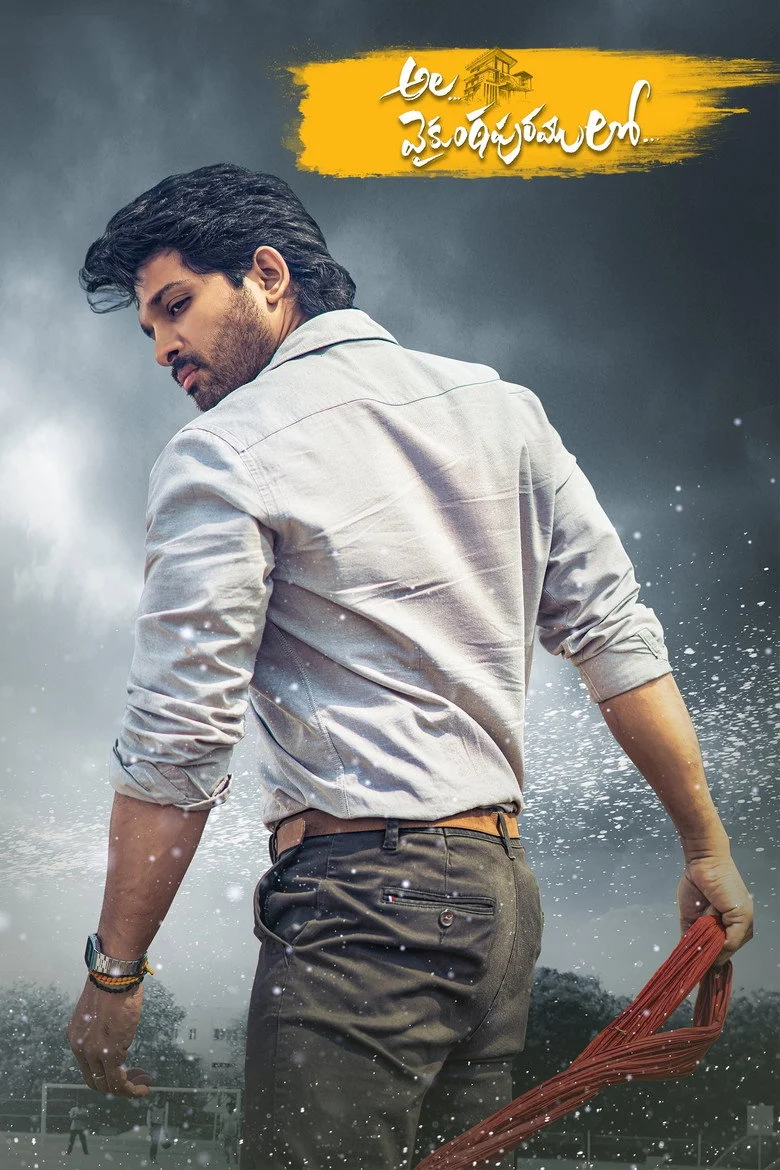
Table of Contents
Quick Facts
Ala Vaikunthapurramuloo is a Telugu family entertainer directed by Trivikram Srinivas, starring Allu Arjun, Pooja Hegde, Tabu and Jayaram. Released on 12 January 2020 for Sankranti, it became one of those rare films that transcends box office to become part of the culture — its songs, dialogues and style seeping into everyday life. Years later, people still light up when the title track plays.
The film grossed around ₹280 crore worldwide and is streaming on Netflix. Strip away the hype, and what remains is a beautifully crafted film: warm, funny, emotional and technically polished — the kind of mainstream cinema that respects its audience’s intelligence while giving them everything they came for.
Plot
Bantu has grown up believing he is the son of Valmiki, a bitter, insecure clerk who treats him with barely concealed contempt. Bantu endures it all — the insults, the comparisons, the lack of love — because that is what dutiful sons do. Then the truth explodes into his life: he was switched at birth. His real father is the wealthy, dignified Ramachandra. Valmiki’s biological son has been living Bantu’s rightful life of luxury.
What Bantu does with this knowledge is what makes the film interesting. He does not storm the mansion demanding his birthright. Instead, he quietly enters Ramachandra’s household as an employee, determined to protect his real family from the threats circling them — particularly the vengeful Appala Naidu, who has his own scores to settle. Along the way, Bantu falls for Amulya, Ramachandra’s headstrong niece, in a romance that charms without derailing the plot.
The emotional core, though, is Bantu’s relationship with the mother he never knew he had — played with heartbreaking restraint by Tabu. The climax brings every thread together: the villains, the family secret, and Bantu’s long-deferred confrontation with the man who raised him. It is a classic switched-at-birth tale, but told with such wit and warmth that the familiarity never matters.
Performance
Allu Arjun is in career-best form. Bantu requires him to be funny, romantic, vulnerable and explosive by turns — and he shifts between these gears effortlessly. His comic timing is razor-sharp, the office scenes are a delight, and his emotional scenes, especially with Tabu, carry genuine weight. This is the performance that proved he could carry any genre, not just action spectacles.
Tabu is quietly devastating as the mother torn between two sons; she does more with a glance than most actors do with monologues. Pooja Hegde is sparkling as Amulya — confident, funny, a true partner to Bantu rather than a decorative love interest. Jayaram brings dignity to the real father, while Murali Sharma is hatefully good as the petty, cruel Valmiki.
Screenplay and Direction
Trivikram Srinivas is Telugu cinema’s master of the intelligent entertainer, and this is him at his most complete. The dialogue crackles — witty without being smug — and the screenplay balances comedy, romance, action and melodrama with rare confidence. Every character, even minor ones, feels written rather than placed. He takes a familiar premise and makes it feel fresh through sheer quality of writing.
The direction is elegant and assured. Trivikram stages the comedy with precision timing, the emotions with restraint, and the action with flair. The production design is lavish, the pacing confident — this is a filmmaker in total command of his craft, making the difficult look easy.
Music
S. Thaman’s music is the stuff of legend. The Ala Vaikunthapurramuloo album was not just successful — it was a phenomenon. “Butta Bomma” crossed a billion views and became a worldwide dance trend; “Samajavaragamana” and “Ramuloo Ramulaa” were equally massive. Thaman’s background score keeps the film’s emotional and mass moments soaring. This album alone would secure the film’s place in history.
The cinematography is glossy and rich, matching the film’s warm tone, and the song picturisations — particularly “Butta Bomma” — are among the most stylish in recent Telugu cinema.
Themes
Beneath the entertainment, the film is about identity and belonging — what makes a family, blood or love? Bantu’s journey asks whether the years of cruelty can be undone by the discovery of truth, and whether forgiveness is possible when the wound runs that deep. It also explores class with a light touch: the contrast between Bantu’s middle-class upbringing and the world he was born into, and the discovery that money does not buy the warmth he craved.
Conclusion
Ala Vaikunthapurramuloo is modern Telugu mainstream cinema at its finest — brilliantly written, superbly performed, and soundtracked by an all-time great album. Allu Arjun and Trivikram deliver a film that is as rewatchable as it is lovable, warm without being soft, funny without being frivolous. An easy classic, and the rare blockbuster that gets better every time you revisit it.
Watch the official trailer: