
RangiTaranga (2015) – Movie Info, Cast, Trailer & Where to Watch
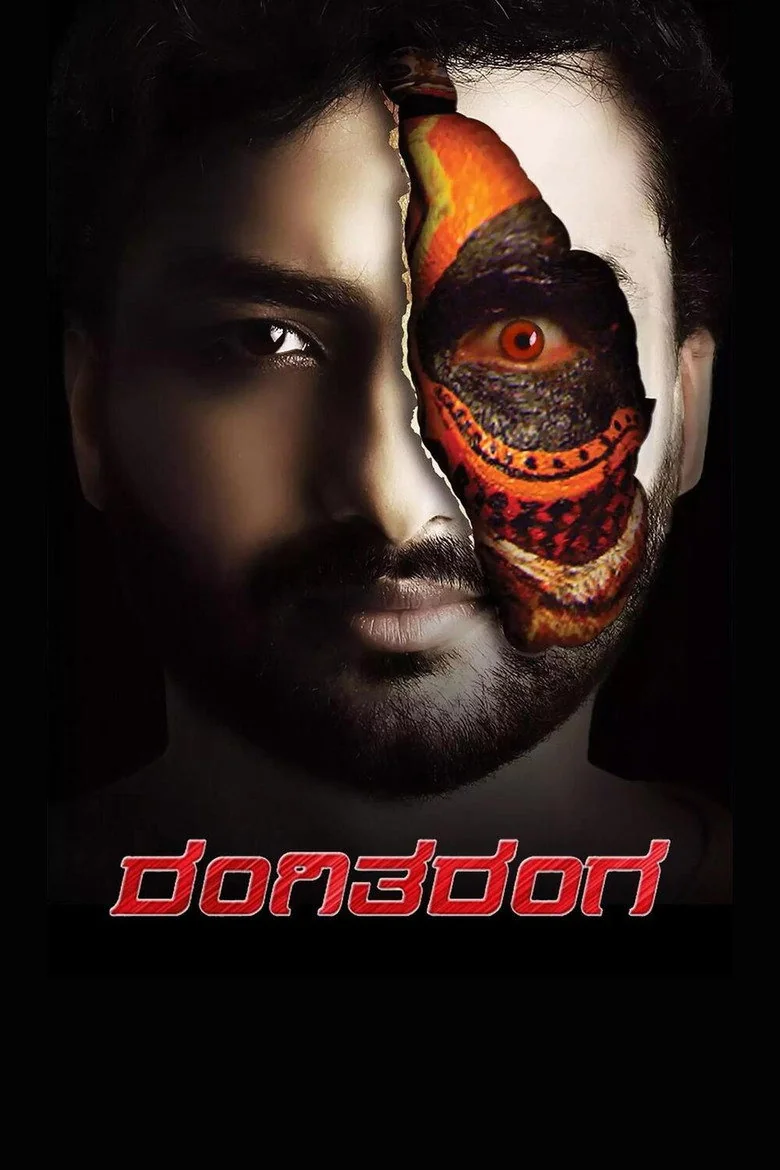
Table of Contents
Quick Facts
Every decade or so, a small Kannada film comes along that quietly rewrites what the industry believes is possible, and in 2015 that film was RangiTaranga. Made for about ₹1.5 crore by debutant Anup Bhandari, a former software professional, it released on 3 July 2015, just a week before Baahubali, and should have been crushed. Instead, word of mouth carried it to roughly ₹43 crore worldwide, making it the year’s highest-grossing Kannada film and landing it on the reminder list of productions eligible for the 88th Academy Awards.
Starring Bhandari’s younger brother Nirup alongside debutantes Radhika Chetan and Avantika Shetty, with veteran Saikumar in a pivotal role, this is a psychological mystery thriller steeped in the folklore of coastal Karnataka. It is the kind of film that rewards a second viewing, because once you know where it is going, you notice how carefully every clue was planted. If you like mysteries that respect your intelligence, give this one an evening.
Plot
Gautham Suvarna is a novelist living a reclusive life in Ooty, and his latest book is titled RangiTaranga, a word that seems oddly tied to his own buried past. His wife Indu, a gentle young woman who paints his covers, has been suffering frightening nightmares, and after an earlier miscarriage she persuades him to visit her ancestral home in the village of Kamarottu to perform rituals meant to ward off evil spirits. It is an ordinary, believable decision, which is exactly why what follows feels so unsettling.
Kamarottu is not welcoming. Strange things begin happening around the old house, including a chilling moment when Indu is nearly dragged into a well, and the villagers whisper about the Guddada Bhoota said to haunt the place. Gautham befriends the postmaster Kalinga and the elderly headmaster Shankar, but his questions irritate the village’s powerful men. Meanwhile Sandhya, a self-styled journalist from Bengaluru, arrives hunting an anonymous writer who publishes as “Anashku.” Then Indu goes missing, and the police make a claim that shatters Gautham: they say his wife died in an accident six years ago.
The investigation that follows keeps folding back on itself. A diary titled Harini surfaces, and the village’s missing-person records reveal a grim pattern: every year, a pregnant woman vanishes. Without spoiling the film’s best surprises, it is fair to say RangiTaranga is as much about who these people really are as what happened to them, and its final stretch recontextualises nearly everything you thought you knew. It is a rare thriller that earns its twists instead of merely springing them.
Performance
For a film headlined by newcomers, the acting is remarkably assured. Nirup Bhandari plays Gautham as a man realising his own memories cannot be trusted, carrying that confusion without tipping into melodrama. Radhika Chetan gives Indu a quiet vulnerability that makes her disappearance genuinely ache, while Avantika Shetty lends Sandhya the sharp, inquisitive energy that keeps the investigation moving. None of them feel like debutants by the final reel.
But the film belongs, in the end, to Saikumar. As Thenkabail Ravindra “Kalinga” Bhat, the mild-mannered postmaster with something coiled underneath, he delivers one of the most memorable supporting turns in modern Kannada cinema, all surface warmth and menace in the pauses. He won the Filmfare Award for Best Supporting Actor for it, deservedly. The bench is deep too: Ananth Velu, Arvind Rao, and Pramod Shetty all add texture to Kamarottu’s lived-in world.
Screenplay and Direction
Anup Bhandari’s command of his material is the film’s real marvel. The screenplay plants its clues in plain sight and dares you to connect them, and the interval revelation lands hard because the groundwork was laid so quietly. Bhandari has said the story grew from “Dennana Dennana,” the theme song of the 1990s serial Guddada Bhoota, and that childhood memory of coastal superstition runs through every frame. The film knows its milieu, the rituals, the village hierarchies, the Tulu-inflected speech, without ever exoticising it.
The honest criticism is pace: a few songs in the second half slow the thriller’s momentum, as several reviewers noted. But the craft around that flaw is so strong it hardly matters. The film looks like a production many times its budget, and Bhandari’s staging, his patient build of dread, his perfectly timed reveals, marks a filmmaker who arrived fully formed. For a debut, it is an astonishing display of control.
Music
Bhandari did not just direct the film; he composed its songs and wrote nearly all the lyrics, and the album was among the year’s most discussed. The standout is “Dennana Dennana,” sung in Tulu, the very track that inspired the story, alongside the playful “Akka Pakka,” the melodious “Kele Cheluve,” and the haunting “Kareyole,” for which Inchara Rao won the Filmfare Award for Best Female Playback Singer. Critics praised the album for keeping its lyrics rooted in Kannada and Tulu instead of chasing the fashionable English-Hindi mix.
Equally vital is B. Ajaneesh Loknath’s background score, which reviewers compared favourably with the best international thrillers; it tightens around the suspense like a vice and never overstates. And the cinematography by Lance Kaplan and William David deserves its own applause: the misty tea gardens of Ooty and the rivers and ravines of coastal Mangaluru are rendered with a richness that makes the film as much a visual experience as a narrative one.
Themes
The poster, a young man’s face split to reveal a painted Bhoota mask beneath, states the film’s central idea: everyone in RangiTaranga wears two faces. Bhandari refuses to divide people neatly into good and evil, and the story keeps circling guilt, memory, and the identities we build to survive what we have done. Beneath the supernatural trappings, the true horror is human: what superstition can be made to hide, and what people do when they believe nobody is watching.
Conclusion
RangiTaranga remains a landmark: the rare debut that succeeded artistically and commercially on its own stubborn terms, and still one of the finest mystery thrillers Kannada cinema has produced. It is not currently streaming on the major platforms, so watch for television reruns, festival screenings, and re-releases. This is a film best experienced with an audience holding its breath together.
Watch the official trailer: