
Kabali
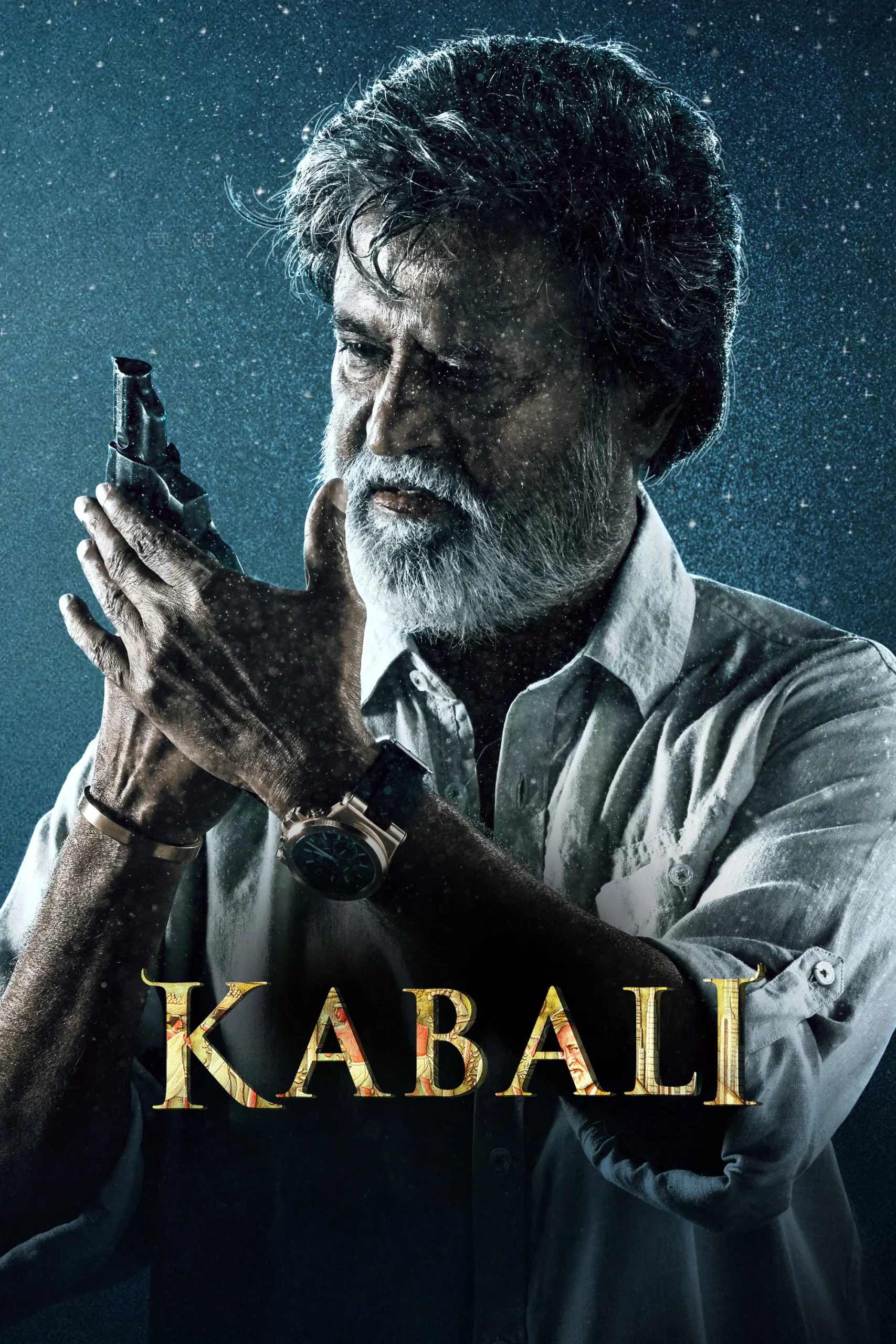
Table of Contents
Quick Facts
Kabali is a 2016 Tamil action crime drama directed by Pa. Ranjith, starring Rajinikanth, Radhika Apte, Winston Chao and Dhansika. Released worldwide on 22 July 2016, it was one of the most feverishly anticipated Indian films of its decade — the first time the Superstar had placed himself in the hands of a young, politically sharp director since Shankar’s Sivaji nearly a decade earlier. The teaser alone shattered Indian YouTube records, and when the film opened, it did so on a scale Tamil cinema had never seen before.
The film is currently streaming on Prime Video and Sun NXT. What makes Kabali fascinating, years on, is how deliberately it refuses to be a conventional Rajinikanth vehicle. Ranjith was less interested in the invincible hero than in an ageing man carrying twenty-five years of prison and loss — and he asked the biggest star in the country to play his age, his grief and his weariness on screen.
Plot
Kabaleeswaran, known as Kabali, walks out of a Malaysian prison after twenty-five years inside on a false charge — a temple massacre he did not start, which took the lives of many, including, he believes, his pregnant wife Kumudhavalli. In his absence, the Kuala Lumpur underworld has reorganised itself: a rival outfit called Gang 43, led by the polished Tony Lee, now runs the streets, flooding them with drugs that are destroying the local Tamil youth.
Freed but unbowed, Kabali sets out on two missions that slowly become one: to settle scores with the men who framed him and stole his empire, and to find out what really happened to his wife and daughter, whom he has long presumed dead. The trail leads him from Kuala Lumpur to Thailand and eventually to Puducherry, with old betrayals surfacing at every stop — including the truth about who engineered the massacre all those years ago.
Without giving away the turns, the film builds toward a reunion the audience has been waiting the entire runtime for, and a final confrontation with Tony Lee’s gang. The closing moments are famously ambiguous — the screen cuts to black on a gunshot, leaving Kabali’s fate deliberately unresolved and sparking debates that continued for years.
Performance
Rajinikanth is the film’s towering centre, and it is one of his most interesting late-career performances. He plays Kabali not as the swaggering don of his nineties classics but as an old man — slower, quieter, visibly carrying his years. The famous close-ups hold on his weathered face for long stretches, and he rewards that trust: the scenes where Kabali confronts his past have a rawness that the star’s more commercial films rarely permit. When the trademark style does erupt, it feels earned rather than obligatory.
Radhika Apte brings quiet strength to Kumudhavalli, making a lasting impression in limited screen time, while Dhansika is a standout as Yogi, the contract killer whose true identity drives the film’s emotional core — a performance that won her the Filmfare Award for Best Supporting Actress. Winston Chao is suitably cold as Tony Lee, and Kalaiyarasan, Kishore and John Vijay lend solid support as the men orbiting Kabali’s world.
Screenplay and Direction
Pa. Ranjith came to Kabali fresh off the cult success of Madras, and his fingerprints are all over the film — in the best ways. He shoots Malaysia’s Tamil neighbourhoods with documentary-like attention, stages the action with unusual restraint, and, most boldly, slows the film down for long dialogue passages about dignity, labour and community. The “crabs in a bucket” speech, in which Kabali diagnoses why his own people keep pulling each other down, is pure Ranjith: political, provocative and unlike anything a Rajinikanth film had attempted before.
The trade-off is pacing. Ranjith’s measured, brooding rhythm frustrated viewers expecting a full-throttle gangster saga, and the screenplay’s middle stretch carries a fair amount of exposition. But the film’s visual grammar — Murali’s smoky cinematography, the lived-in Malaysian locations, the refusal to glamourise violence — gives it a texture that has aged far better than its mixed initial reception suggested.
Music
Santhosh Narayanan, continuing his partnership with Ranjith after Attakathi and Madras, delivers a score that is integral to the film’s identity. “Neruppu Da” — the blazing intro number — became a cultural phenomenon in its own right, played at every celebration and rally for years afterward. “Thendral Vanthu” and “Maya Nadhi” provide the softer, romantic counterpoints, while the background score leans on moody brass and percussion that underline Kabali’s old-school menace without ever tipping into noise.
The sound design deserves equal credit: the film’s Malaysia feels audible as well as visible, from the street-level bustle of the Tamil quarters to the hollow quiet of Kabali’s prison memories.
Themes
Kabali is, beneath the gangster trappings, a film about the Malaysian Tamil community — descendants of plantation labourers, marginalised and often invisible, fighting for dignity in a country that barely acknowledges them. Ranjith frames Kabali’s criminal empire as, in its origins, a vehicle for that fight: a don who built schools and kept drugs out of his territory. The film keeps circling one painful question — whether a man who chose the gun can ever truly put it down — and refuses to give a clean answer. Ageing, guilt, fractured families and the price of pride all run through it.
Conclusion
Kabali remains a fascinating experiment: the biggest star in Tamil cinema surrendering himself to a young auteur’s political vision, and the box office rewarding the gamble anyway. It is not a flawless film — the pacing sags, and the screenplay sometimes strains under its ambitions — but it is a brave one, and Rajinikanth’s willingness to look old, tired and broken on screen gave his fans a version of their hero they had never seen. As a gangster drama with a conscience, and as a milestone in the Superstar’s filmography, it more than earns its place in the canon.
Watch the official trailer: