
Prasthanam (2010) – Movie Info, Cast, Trailer & Where to Watch
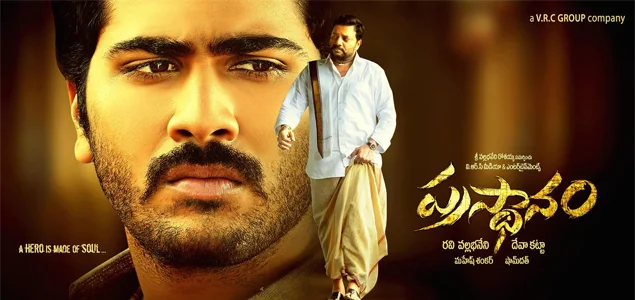
Table of Contents
Quick Facts
Prasthanam is a Telugu political action drama directed by Deva Katta, starring Sai Kumar and Sharwanand, with Sundeep Kishan and Ruby Parihar. Released on 16 April 2010, it told the story of a political patriarch’s family tearing itself apart over succession — a tale of power, loyalty and betrayal that critics hailed as a landmark and that was later remade in Hindi in 2019.
The film currently streams on Sun NXT. Operatic, intelligent and emotionally devastating, Prasthanam remains one of the finest political dramas in Telugu cinema — a film that understands power the way only family can teach it.
Plot
A powerful politician has built his empire on loyalty, fear and the unquestioning devotion of his family. At his right hand stands his stepson (Sharwanand) — raised as his own, utterly loyal, the enforcer who does what the family requires without being asked. At his left, increasingly, stands his own younger son (Sundeep Kishan), the blood heir being groomed for succession, impatient with the old man’s caution and resentful of the outsider at his father’s side.
Deva Katta sets this triangle smouldering and then introduces the spark: a crisis — an election, a rival, a betrayal — that forces the question the family has avoided for years. Who inherits the empire? The loyal stepson who bled for it, or the true son whose birthright it is? What begins as political manoeuvring curdles into something older and darker: a contest of love, legitimacy and belonging, fought with the weapons of power.
The film’s back half is a tragedy in the classical sense — every character acting rationally from their own wounds, every rational act deepening the catastrophe. The violence, when it comes, is not thrilling but sickening, which is precisely the point. Prasthanam’s climax offers no winners, only survivors, and its final image — of what power leaves behind — is one of Telugu cinema’s most haunting.
Performance
Sai Kumar gives a monumental performance as the political patriarch — commanding, canny, and finally tragic. He plays power as a man who has forgotten it was ever a choice, and his scenes of calculation carry the quiet menace of someone who has survived everything by sacrificing everything. It is one of the great Telugu screen performances of its era.
Sharwanand matches him as the stepson — loyal, wounded, dangerous. He plays a man raised inside power but never quite of it, and his slow-burning resentment gives the film its emotional core; when his restraint finally breaks, it is genuinely frightening. Sundeep Kishan brings volatility and vulnerability to the younger son, the blood heir whose entitlement curdles into cruelty. The triangle of father and sons is played like a chess match where every move draws blood.
Screenplay and Direction
Deva Katta’s screenplay is a marvel of slow-burn construction. He takes the familiar materials of the political drama — the patriarch, the heir, the loyal lieutenant — and builds something closer to a family epic, where every political move is also an emotional one. The dialogue is sharp without being showy, and the film’s patience in the first half pays off enormously: by the time the tragedy ignites, you understand exactly why each character cannot do otherwise.
Katta directs with a fine sense of scale, moving between intimate family scenes and the broader machinery of power without losing the thread. If the film’s darkness occasionally feels unrelenting, that relentlessness is the subject — Prasthanam is interested in what power does to love, and it refuses to look away. The Hindi remake of 2019 only confirmed what the original proved: this is a story built to last.
Music
Mahesh Shankar’s music serves the film’s dark, operatic tone with admirable restraint. The songs are woven into the narrative rather than imposed on it, and the album’s brooding textures suit a story where celebration always carries an undertone of menace. It is not a soundtrack of hits but of moods — and the moods are exactly right.
The background score is the music’s greater achievement: low, tense, funereal. Shankar scores the family like a kingdom in decline, and his music gives the film’s betrayals their Shakespearean weight. In the confrontations between father and sons, the score knows precisely when to press and when to withdraw — a model of dramatic intelligence.
Themes
Prasthanam is, at its heart, about the difference between loyalty and blood — and the terrible suspicion that in the house of power, neither is enough. The stepson’s tragedy is that his devotion can never purchase what the son was given freely; the son’s tragedy is that what he was given freely has made him unworthy of it. The film’s bleak wisdom is that power does not merely corrupt love — it makes love indistinguishable from strategy.
It is also a film about fathers and the debts they leave. The patriarch loves his family in the only way power has taught him — by providing, by protecting, by controlling — and the film’s devastating insight is that his love is real and still not enough. In the end, Prasthanam suggests that the true subject of every political drama is the family dinner table, where the real wars are fought.
Conclusion
Prasthanam is Deva Katta’s landmark — a political drama with the soul of a family tragedy, anchored by two towering performances and a script that trusts its audience. It proved Telugu cinema could do power and pathos in the same breath, and its influence is visible in everything from the Hindi remake to a generation of political dramas. Streaming on Sun NXT, it remains essential: the rare film about power that is really about love — and what love costs when power is the family business.